TIFAS® Blind Rivets
The TIFAS® standard blind rivet is versatile and complies with the relevant standards in the DIN EN ISO 15977 to 15984 series.
DIN EN ISO Standard | Description |
| DIN EN ISO 15977 | Open end blind rivets with break pull mandrel and protruding head - AlA/St |
| DIN EN ISO 15978 | Open end blind rivets with break pull mandrel and countersunk - AlA/St |
| DIN EN ISO 15979 | Open end blind rivets with break pull mandrel and protruding head - St/St |
| DIN EN ISO 15980 | Open end blind rivets with break pull mandrel and countersunk - St/St |
| DIN EN ISO 15981 | Open end blind rivets with break pull mandrel and protruding head - AlA/AlA |
| DIN EN ISO 15982 | Open end blind rivets with break pull mandrel and countersunk - AlA/AlA |
| DIN EN ISO 15983 | Open end blind rivets with break pull mandrel and protruding head - A2/A2 |
| DIN EN ISO 15984 | Open end blind rivets with break pull mandrel and countersunk - A2/A2 |
Benefits at a glance
- Universal use
- Fastens various materials such as metals and plastics
- Quick and secure installation
- Permanent secure fixing
- Heatless installation means component will not warp
- Eliminates extensive refinishing
- Ideal for lightweight constructions
Sample applications:
- General industry
- Automotive industry
- Construction industry
- Bodywork and vehicle manufacture
Installation steps
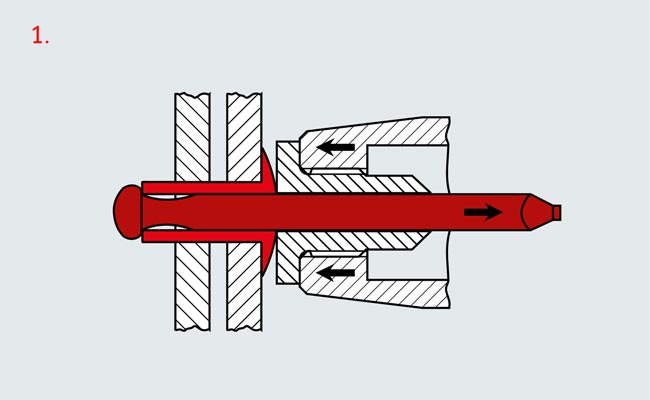
- Place the blind rivet with mandrel into the installation tool and insert into the drilled hole
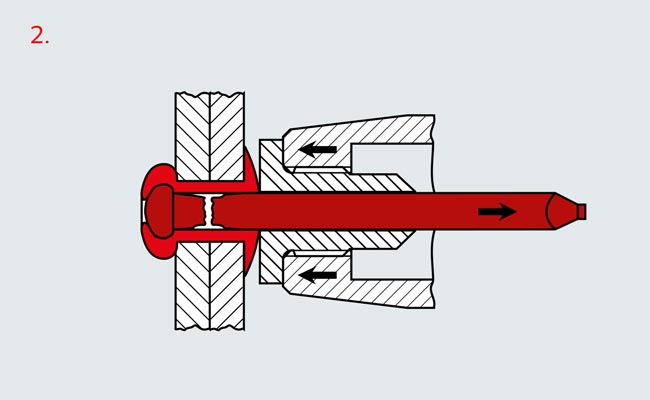
- On triggering the installation tool, the jaws take hold of the mandrel and pull. At the same time, the mandrel head swages the end of the shank on the sleeve. The rivet is installed when the mandrel head is at the same height as the surface layer of the component
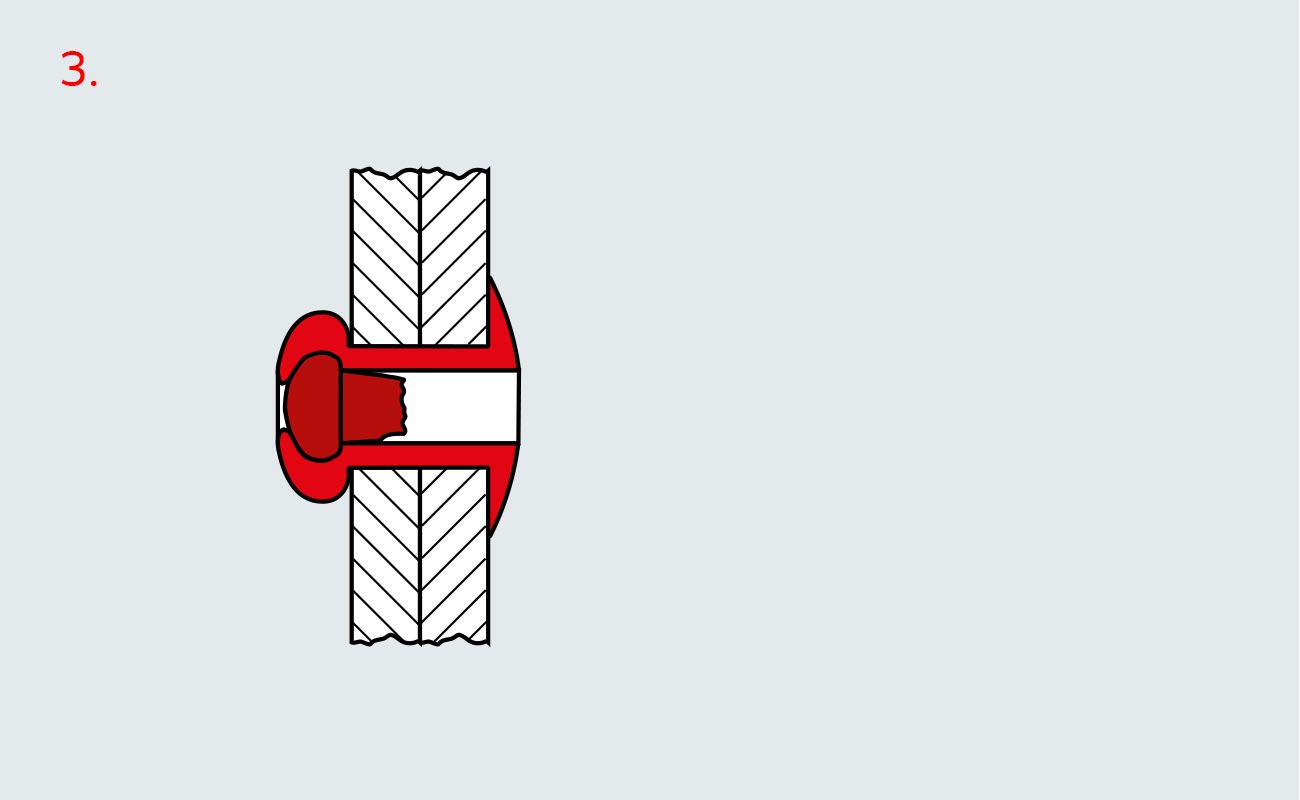
- A surge of force is applied at this point, causing the mandrel to snap off when it reaches its set breaking point